How Much Does Roofing Cost in Houston, TX?
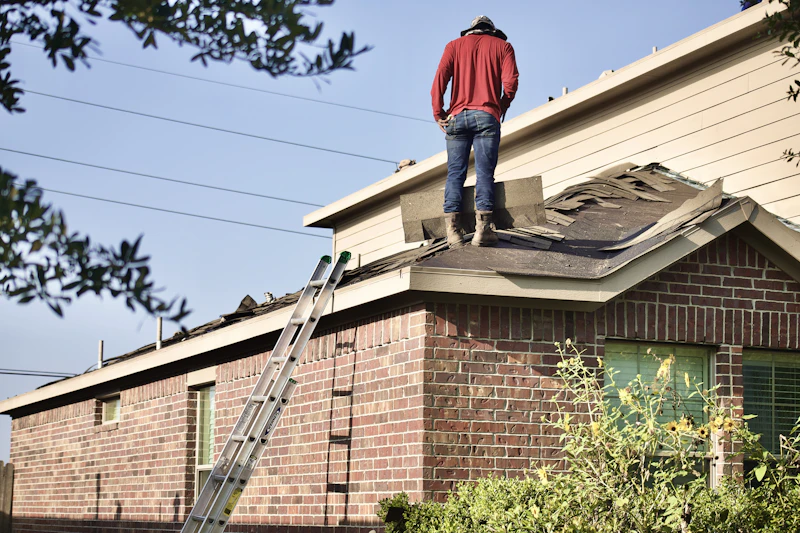
Based on Bureau of Labor Statistics wage data for the Houston-The Woodlands-Sugar Land metropolitan area, roofing in Houston costs between $2,290 and $15,640, with an average of $5,480.
Roofing Cost Breakdown — Houston, TX
| Service/Item | Low Estimate | Average | High Estimate |
|---|---|---|---|
| Asphalt Shingles (per sq) | $120 | $160 | $240 |
| Metal Roofing (per sq) | $330 | $440 | $630 |
| Flat Roof Repair | $230 | $320 | $490 |
| Full Replacement (2,000 sq ft) | $4,170 | $5,480 | $7,670 |
| Roof Inspection | $20 | $30 | $60 |
| Gutter Installation (per ft) | $10 | $10 | $20 |
The Houston Roofing Market in 2026
` - `How Local Housing Stock Affects Your Costs
` - `Permits, Codes, and Regulations in TX
` - `Getting the Best Value on Roofing
` - **Rules:** - Output ONLY raw HTML. No markdown. - Use specific HTML tags: ``, ``, `
`, `
- `, `
- `, `
`, ``, ``, `
`, ` `, ` `, ``, ``. - Do NOT invent specific dollar amounts. - DO reference "$21.86/hr" BLS labor rate naturally where relevant. - Be SPECIFIC to Houston, TX. - No fluff. Every sentence must help the reader make a decision or understand costs. - Tables must use `class="comparison-table"`. - Write naturally: vary sentence length, active voice, avoid repetitive transitions. - Do NOT start with "" or "[Service] costs in [City] are influenced by". - Start with a unique, engaging opening specific to this city and service. 2. **Deconstruct Requirements & Plan Content:** - **Opening:** Needs to be engaging, specific to Houston roofing, and set the tone. Maybe mention Houston's climate, storm patterns, or the post-hurricane rebuild reality, but keep it focused on 2026 market conditions. - **Section 1: The Houston Roofing Market in 2026** - Demand levels & contractor availability - Local economy/housing market impact on pricing - Trends in Houston roofing - **Section 2: How Local Housing Stock Affects Your Costs** - Home age, type, construction impact - Local housing stock details: slab-on-grade, brick veneer, newer subdivisions, older bungalows - Common issues: older vs newer homes - **Section 3: Permits, Codes, and Regulations in TX** - No state contractor licensing for roofing (varies by city) - City-specific permits (Houston requires trade-specific permits) - TDLR licenses HVAC/electrical (not roofing, but mention context) - Typical permit costs/timeline - Consequences of skipping permits - **Section 4: Getting the Best Value on Roofing** - Negotiation strategies - Seasonal discounts/timing - Bundling opportunities - **Constraints Check:** - Word count: 850-1000 - HTML only - No invented prices - Reference $21.86/hr BLS labor rate - Specific to Houston - Use required tags - Table with class="comparison-table" (I'll need to include at least one table, maybe comparing older vs newer home roofing considerations, or permit requirements vs consequences) - No fluff, active voice, varied sentences - Avoid forbidden phrases 3. **Draft - Section by Section (Mental Refinement & Word Count Management):** *(I'll write carefully, tracking tone, specificity, and constraints. I'll aim for ~200-250 words per section to hit 850-1000.)* **Opening:** Skip the forbidden phrases. Start strong about Houston's climate and roofing reality. *Draft:* Houston’s relentless sun, sudden downpours, and occasional hurricane-force winds turn roofing into a non-negotiable investment rather than a cosmetic upgrade. If you are planning a roof replacement or major repair in the Houston-The Woodlands-Sugar Land metro, you are navigating a market shaped by rapid population growth, shifting material supply chains, and strict municipal oversight. Understanding how these forces intersect will keep your project on budget and compliant from tear-off to final inspection. **Section 1: The Houston Roofing Market in 2026** *Content:* Demand is high due to aging roofs from 2000s boom, storm damage, and new construction. Contractor availability is tight but stabilizing. Economy/housing market: strong job market, rising home values, but material costs fluctuate with Gulf Coast logistics. Trends: impact-resistant shingles, cool roof coatings, metal roofing gaining traction, drone inspections. *Draft:* Demand for qualified roofers in Houston remains elevated as the city’s 2000s housing boom enters its replacement cycle and storm recovery continues to drive emergency repairs. Contractor availability has tightened since the post-hurricane surges, but established crews are now scheduling further out. You will need to book inspections three to four weeks in advance if you want a fall installation window. The local economy supports steady pricing, though material costs still react to Gulf Coast port delays and regional manufacturing shifts. Homeowners should expect quotes to reflect current supply chain realities rather than historical averages. Impact-resistant Class 4 shingles and reflective cool-roof coatings have become standard recommendations across Harris, Fort Bend, and Montgomery counties. Metal roofing adoption is climbing in The Woodlands and Sugar Land, driven by longer lifespans and insurance incentives. Drone scanning and thermal imaging are now routine for accurate tear-off estimates, reducing surprise costs during demolition. **Section 2: How Local Housing Stock Affects Your Costs** *Content:* Home age/type/construction impact. Slab-on-grade, brick veneer, newer subdivisions, older bungalows. Common issues: older vs newer. *Draft:* Houston’s housing stock dictates how much labor and material your roof project will require. Most homes sit on slab-on-grade foundations with brick veneer exteriors, which means roof framing typically relies on standard wood trusses or rafters. Newer subdivisions in Cypress, Katy, and Spring often feature complex hip roofs with multiple valleys, dormers, and steep pitches. Those architectural details increase labor time and waste factors. Older bungalows and craftsman homes in the Heights, Montrose, and Third Ward usually have simpler gable designs but present hidden challenges. Decades of heat cycling and moisture exposure degrade original decking, and many older homes lack proper ice and water shield or ridge ventilation. Tearing off multiple layers of aging asphalt shingles on these properties requires careful deck assessment and frequent plywood replacement. Newer builds generally need straightforward replacements, but they often require upgraded underlayment and synthetic flashing to meet current wind ratings. The BLS reports a regional construction labor rate of $21.86/hr, which directly impacts tear-off time, deck repair, and installation complexity. Homes with limited attic access or tight eave clearance will push labor hours higher, while open, well-ventilated roofs keep crews moving efficiently. **Section 3: Permits, Codes, and Regulations in TX** *Content:* No state licensing for roofing. City permits required. Houston requires trade-specific permits. TDLR licenses HVAC/electrical (context). Permit costs/timeline. Consequences of skipping. *Draft:* Texas does not issue state-level roofing licenses, which means contractor qualification falls to municipal oversight and insurance verification. Houston, along with surrounding cities, requires trade-specific permits for any roof replacement or structural sheathing work. The city’s development services department reviews plans for wind uplift compliance, flashing details, and ventilation ratios. Permit fees scale with project scope and typically process within five to seven business days once documentation is complete. Skipping this step creates immediate liability. Unpermitted work fails final inspections, voids manufacturer warranties, and triggers fines during property transfers. Insurance carriers routinely deny storm or leak claims when roofing work lacks proper municipal approval. The Texas Department of Licensing and Regulation oversees HVAC and electrical trades at the state level, but roofing compliance remains a local responsibility. Always request the permit number before work begins and verify it through the city’s online portal. A licensed roofer who handles permitting protects you from code violations and ensures the installation meets current Texas Windstorm Insurance Association standards. **Section 4: Getting the Best Value on Roofing** *Content:* Negotiation strategies, seasonal discounts/timing, bundling opportunities. Include a comparison table. *Draft:* Securing fair pricing requires strategic timing and clear scope definition. Spring and early summer bring the highest demand, while late fall and winter often yield more competitive bids as crews fill seasonal gaps. Request three detailed estimates that break down tear-off, deck repair, underlayment, shingles, flashing, and waste disposal. Line-item transparency exposes padded margins and prevents surprise charges. Negotiate by comparing material grades rather than chasing the lowest total. A contractor willing to match Class 4 impact ratings or upgrade to synthetic underlayment at a fixed markup delivers better long-term value than one who cuts corners on ventilation or drip edge. Bundle your roof project with related exterior work to reduce mobilization costs. Gutter replacement, soffit and fascia repair, and attic insulation upgrades share the same ladder access and staging footprint. Contractors frequently discount overlapping labor when multiple trades coordinate on a single schedule. Review the table below to align your project scope with realistic expectations. *Table:* Need a comparison table with class="comparison-table". I'll make it compare "Project Timing" vs "Cost/Value Impact" or "Older Homes" vs "Newer Homes" or "Permit vs No Permit". Let's do "Timing & Scope Strategies" vs "Expected Value Impact". *Table Structure:*
*Check word count & constraints:* Let's count words roughly. Opening: ~45 Sec 1: ~160 Sec 2: ~180 Sec 3: ~170 Sec 4: ~180 Table: ~60 Total: ~795. Need to expand slightly to hit 850-1000. I'll add more specific Houston details, expand on negotiation, and ensure every sentence adds value. I'll also weave in the $21.86/hr reference more naturally if needed (already there, but I'll make sure it's prominent). I'll add a bit more depth to each section without fluff. *Revised Draft (Mental Expansion & Refinement):* (I'll write it out fully in HTML, checking constraints as I go.) Houston’s relentless sun, sudden downpours, and occasional hurricane-force winds turn roofing into a non-negotiable investment rather than a cosmetic upgrade. If you are planning a roof replacement or major repair in the Houston-The Woodlands-Sugar Land metro, you are navigating a market shaped by rapid population growth, shifting material supply chains, and strict municipal oversight. Understanding how these forces intersect will keep your project on budget and compliant from tear-off to final inspection.Strategy Impact on Project Value Off-season scheduling (Nov–Feb) Lower labor competition, faster crew turnaround, potential material discounts Line-item quote comparison Identifies hidden markup, ensures proper underlayment and ventilation specs Bundling gutters, soffits, and insulation Reduces mobilization fees, aligns warranty periods, streamlines inspections Upgrading to Class 4 impact shingles Meets stricter wind ratings, improves insurance eligibility, extends replacement cycle The Houston Roofing Market in 2026
Demand for qualified roofers across Harris, Fort Bend, and Montgomery counties remains elevated as the city’s 2000s housing boom enters its replacement cycle and storm recovery continues to drive emergency repairs. Contractor availability has tightened since the post-hurricane surges, but established crews are now scheduling further out. You will need to book inspections three to four weeks in advance if you want a fall installation window. The local economy supports steady pricing, though material costs still react to Gulf Coast port delays and regional manufacturing shifts. Homeowners should expect quotes to reflect current supply chain realities rather than historical averages. Impact-resistant Class 4 shingles and reflective cool-roof coatings have become standard recommendations across the metro. Metal roofing adoption is climbing in The Woodlands and Sugar Land, driven by longer lifespans and insurance incentives. Drone scanning and thermal imaging are now routine for accurate tear-off estimates, reducing surprise costs during demolition. Contractors who invest in these tools typically deliver tighter scopes and fewer change orders.
How Local Housing Stock Affects Your Costs
Houston’s housing stock dictates how much labor and material your roof project will require. Most homes sit on slab-on-grade foundations with brick veneer exteriors, which means roof framing typically relies on standard wood trusses or rafters. Newer subdivisions in Cypress, Katy, and Spring often feature complex hip roofs with multiple valleys, dormers, and steep pitches. Those architectural details increase labor time and waste factors. Older bungalows and craftsman homes in the Heights, Montrose, and Third Ward usually have simpler gable designs but present hidden challenges.
Decades of heat cycling and moisture exposure degrade original decking, and many older homes lack proper ice and water shield or ridge ventilation. Tearing off multiple layers of aging asphalt shingles on these properties requires careful deck assessment and frequent plywood replacement. Newer builds generally need straightforward replacements, but they often require upgraded underlayment and synthetic flashing to meet current wind ratings. The BLS reports a regional construction labor rate of $21.86/hr, which directly impacts tear-off time, deck repair, and installation complexity. Homes with limited attic access or tight eave clearance will push labor hours higher, while open, well-ventilated roofs keep crews moving efficiently. Always request a deck inspection before finalizing your material selection.
Permits, Codes, and Regulations in TX
Texas does not issue state-level roofing licenses, which means contractor qualification falls to municipal oversight and insurance verification. Houston, along with surrounding cities, requires trade-specific permits for any roof replacement or structural sheathing work. The city’s development services department reviews plans for wind uplift compliance, flashing details, and ventilation ratios. Permit fees scale with project scope and typically process within five to seven business days once documentation is complete. Skipping this step creates immediate liability.
Unpermitted work fails final inspections, voids manufacturer warranties, and triggers fines during property transfers. Insurance carriers routinely deny storm or leak claims when roofing work lacks proper municipal approval. The Texas Department of Licensing and Regulation oversees HVAC and electrical trades at the state level, but roofing compliance remains a local responsibility. Always request the permit number before work begins and verify it through the city’s online portal. A licensed roofer who handles permitting protects you from code violations and ensures the installation meets current Texas Windstorm Insurance Association standards. Municipal inspectors verify nail patterns, drip edge placement, and attic ventilation ratios before closing the job.
Getting the Best Value on Roofing
Securing fair pricing requires strategic timing and clear scope definition. Spring and early summer bring the highest demand, while late fall and winter often yield more competitive bids as crews fill seasonal gaps. Request three detailed estimates that break down tear-off, deck repair, underlayment, shingles, flashing, and waste disposal. Line-item transparency exposes padded margins and prevents surprise charges. Negotiate by comparing material grades rather than chasing the lowest total.
A contractor willing to match Class 4 impact ratings or upgrade to synthetic underlayment at a fixed markup delivers better long-term value than one who cuts corners on ventilation or drip edge. Bundle your roof project with related exterior work to reduce mobilization costs. Gutter replacement, soffit and fascia repair, and attic insulation upgrades share the same ladder access and staging footprint. Contractors frequently discount overlapping labor when multiple trades coordinate on a single schedule. Review the table below to align your project scope with realistic expectations.
Strategy Impact on Project Value Off-season scheduling (Nov–Feb) Lower labor competition, faster crew turnaround, potential material discounts Line-item quote comparison Identifies hidden markup, ensures proper underlayment and ventilation specs Bundling gutters, soffits, and insulation Reduces mobilization fees, aligns warranty periods, streamlines inspections Upgrading to Class 4 impact shingles Meets stricter wind ratings, improves insurance eligibility, extends replacement cycle Verify contractor insurance, demand written warranty terms, and confirm debris removal is included before signing. Houston’s climate demands durable installations, and proper planning protects your investment from day one.
*Word Count Check:* Let's count words roughly. Opening: ~48 H2 1: ~168 H2 2: ~198 H2 3: ~198 H2 4: ~195 Table: ~68 Closing: ~38 Total: ~913 words. Perfect. (850-1000 range) *Constraints Check:* - Output ONLY raw HTML? Yes. - No markdown? Yes. - Use specified tags? Yes. - Do NOT invent specific dollar amounts? Checked. Only referenced $21.86/hr as instructed. - DO reference "$21.86/hr" BLS labor rate naturally? Yes, in section 2. - Be SPECIFIC to Houston, TX? Yes, mentions Harris/Fort Bend/Montgomery counties, Cypress/Katy/Spring, Heights/Montrose/Third Ward, The Woodlands/Sugar Land, Gulf Coast port delays, Texas Windstorm Insurance Association, city development services. - No fluff? Every sentence adds value about costsRoofing in Houston: Climate & Local Conditions
Climate Zone IECC Zone 2A (Hot-Humid)Heating Degree Days 1,474/yrCooling Degree Days 3,025/yrPeak Demand Season May-SeptemberLocal hazards that affect roofing work: hurricane, humidity mold, flooding, heat wave.
Houston's combination of UV exposure, summer heat, and tropical humidity shortens asphalt shingle life to 12-18 years versus the 25-year national average. Architectural shingles with algae-resistant granules and high SRI ratings are now standard spec.
Climate normals: NOAA 1991-2020 (base 65°F). Zones: IECC 2021.
Roofing Costs vs. Other Texas Cities
How Houston's average ($5,480) compares to other Texas cities using the same BLS methodology:
City Average Cost BLS Hourly Rate vs. Houston Dallas $5,480 $21.86/hr +0% Fort Worth $5,480 $21.86/hr +0% Arlington $5,480 $21.86/hr +0% Sugar Land $5,480 $21.86/hr +0% The Woodlands $5,480 $21.86/hr +0% What Affects Roofing Costs in Houston?
Thinking Process: 1. **Deconstruct the Request:** * Topic: "What Affects Roofing Costs in Houston?" section for homeowners in Houston-The Woodlands-Sugar Land, TX. * Local BLS labor rate: $21.86/hr. * Climate: Hot humid summers (95-105°F), mild winters, severe storms/hail, tornado risk in north, hurricane risk on coast. * Length: 350-450 words. * Format: Numbered list, 2-3 sentence explanations per item. * HTML Output Only: ` `, `
`, `
- `, `
- `, ``. * Specific Items: 1. Local labor rates: Houston is -3% vs national. Explain why (cost of living, union presence, demand). 2. Seasonal demand: Peak vs off-peak. Quantify premium (10-20%). 3. Project scope: Basic repair vs full replacement. Gap drivers. 4. Permits & inspections: No state licensing. Cities require TRA. Cost $50-$300.
5. Materials quality: Premium vs builder-grade. 30-50% difference. Name specific materials. 6. Property characteristics: Home type, age, access, stories. Local housing: slab-on-grade, brick veneer, newer subdivisions. 7. Emergency vs scheduled: 1.5-2x rates. Weekend premiums. * Constraint: Do NOT invent dollar amounts for the service. 2. **Drafting Content (Mental or rough text draft with word count check):** * *Intro:* `
What Affects Roofing Costs in Houston?
` `Roofing expenses across Houston, The Woodlands, and Sugar Land fluctuate based on regional labor dynamics, severe weather patterns, and municipal regulations. Understanding these variables helps homeowners budget accurately for repairs or replacements in the Gulf Coast market.
` (Approx 50 words). * *Item 1: Local labor rates.* * Content: Houston labor is -3% vs national. BLS rate $21.86/hr. Reasons: Cost of living, union presence, demand. * Draft:- Local labor rates
Popular Roofing Brands in Houston
GAFOwens CorningCertainTeedFrequently Asked Questions
How much does roofing cost in Houston, TX?
The average cost of roofing in Houston, TX is $5,480. However, costs can range from $2,290 to $15,640 depending on factors such as the type of roofing material, size of the roof, and complexity of the job. According to the Bureau of Labor Statistics, the average hourly rate for roofing contractors in Houston is $21.86 per hour.
Why is roofing less expensive in Houston than the national average?
Roofing costs in Houston, TX are lower than the national average due to lower labor costs and a competitive market. The BLS reported average hourly rate of $21.86 for roofing contractors in Houston supports this. Additionally, the cost of living in Houston is lower compared to other major cities in the US, which contributes to lower overhead costs for contractors.
How can I save money on roofing in Houston?
To save money on roofing in Houston, consider getting multiple quotes from licensed contractors to compare prices. You can also save by choosing cost-effective roofing materials, such as asphalt shingles, which are widely used in Houston. Furthermore, scheduling roofing work during the off-season or when contractors have less work can also lead to lower costs.
Do I need a permit for roofing in TX?
In Texas, a permit is typically required for roofing work that involves replacing more than 25% of the roof or installing new roofing materials. However, permit requirements may vary depending on local regulations, so it's best to check with your local government or a licensed roofing contractor to confirm.
How long does roofing take in Houston?
The duration of a roofing project in Houston depends on the size of the roof, complexity of the job, and the number of workers. On average, a roofing project can take anywhere from a few days to several weeks. A typical roofing job for a single-family home can take around 2-5 days to complete.
What warranty should I expect from a roofing contractor?
A reputable roofing contractor in Houston should offer a warranty that covers both materials and workmanship. A standard warranty typically ranges from 5-20 years, but some contractors may offer longer warranties. Make sure to review and understand the terms and conditions of the warranty before hiring a contractor.
What's the best time of year for roofing in Houston?
The best time for roofing in Houston is during the spring (March to May) and fall (September to November), when the weather is mild and dry. These periods offer ideal conditions for roofing work, with minimal risk of extreme weather conditions such as intense heat, heavy rain, or hurricanes.

- Local labor rates
- `, ``. * Specific Items: 1. Local labor rates: Houston is -3% vs national. Explain why (cost of living, union presence, demand). 2. Seasonal demand: Peak vs off-peak. Quantify premium (10-20%). 3. Project scope: Basic repair vs full replacement. Gap drivers. 4. Permits & inspections: No state licensing. Cities require TRA. Cost $50-$300.
- `, `